
Book Hotels Near Top Switzerland Attractions-Switzerland is a country defined by its verticality and its precision.
When travelers begin to plan their journey through the Alps or along the pristine shores of its many lakes, they often underestimate the logistical complexity of the terrain.
The primary challenge isn’t just distance; it is the time required to navigate mountain passes and specialized cogwheel railways.
By choosing to book hotels near top Switzerland attractions, you aren’t just paying for a room;
you are purchasing the luxury of time and the convenience of immediate access to the world’s most photographed landscapes.
Staying within walking distance of a major landmark allows you to witness the “Golden Hour” without the stress of catching the last train back to a distant city.
Furthermore, the “proximity factor” significantly impacts the overall quality of a vacation.
Switzerland’s most iconic sites, such as the Jungfraujoch or the Rhine Falls, can become crowded during peak midday hours.
Travelers who stay locally have the unique advantage of visiting these sites in the early morning or late evening, often having the view entirely to themselves.
This strategic positioning eliminates the “commuter fatigue” that often plagues international tourists who try to see Switzerland from a single base like Zurich or Geneva.
Instead, immersive stays near attractions provide a more authentic connection to the local environment, culture, and rhythm of the Swiss landscape.
Leveraging Geospatial Technology for Smarter Hotel Bookings
The modern traveler no longer relies on static lists; instead, they utilize advanced geospatial technology and real-time mapping integrations to make informed decisions.
When you look to book hotels near top Switzerland attractions, booking platforms now use high-precision GPS data to show exactly how many meters separate your balcony from a landmark.
This technology allows for “isochrone mapping,” which calculates the actual walking or transit time between a hotel and a point of interest,
accounting for elevation changes—a critical feature in the mountainous Swiss terrain.
By using these digital tools, travelers can visualize their daily itinerary and ensure that their morning coffee view aligns perfectly with their travel goals.
Beyond simple distance, technology now facilitates a more integrated booking experience through APIs that connect hotel reservations with Swiss transport schedules.
For instance, many premium booking engines now suggest hotels based on their proximity to the “Grand Tour of Switzerland” route or specific SBB (Swiss Federal Railways) stations.
This technological synergy ensures that once you book your stay, your transit to the attraction is already optimized.
This high-tech approach to travel planning solves the traditional problem of “location letdown,”
where a hotel claims to be “near” an attraction but is actually separated by an inaccessible mountain ridge or a long bus ride.
Top 5 Luxury Hotels Near Iconic Swiss Landmarks
Choosing the right accommodation is the cornerstone of a successful Swiss itinerary.
Below are five real-world examples of hotels that offer unparalleled access to Switzerland’s most famous sites.
Bürgenstock Resort – Perched Above Lake Lucerne
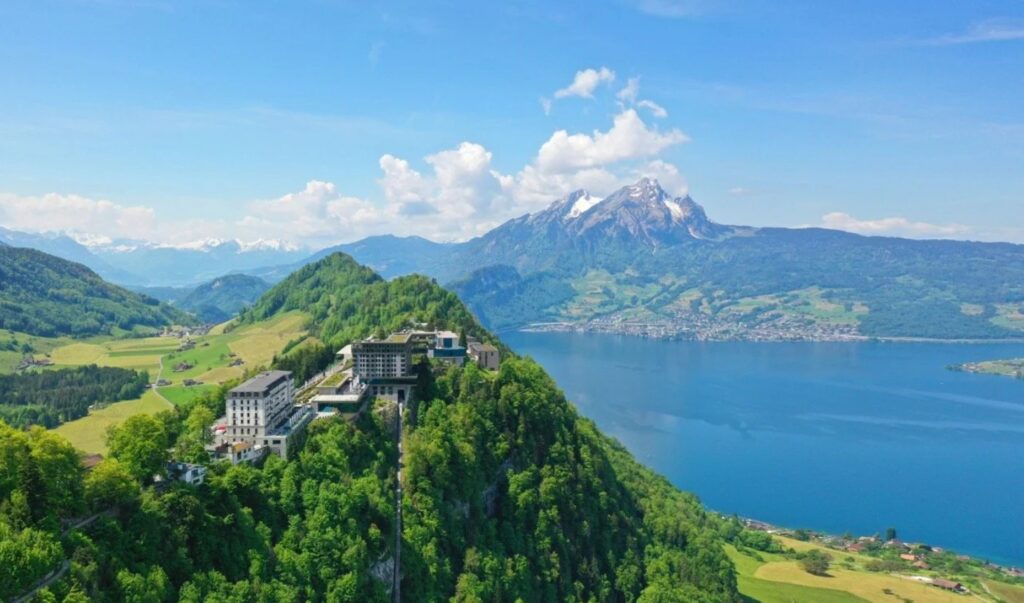
The Bürgenstock Resort is not just a hotel; it is a legendary destination that has hosted royalty and Hollywood icons for over a century.
Located 500 meters above Lake Lucerne on a dramatic mountain ridge, this resort offers a direct, private connection to the Bürgenstock Resort Lake Lucerne via its own catamaran and funicular system.
The most significant attraction here is the Hammetschwand Lift, Europe’s highest outdoor elevator, which is just a short, scenic walk from the hotel lobby.
Staying at the Bürgenstock allows guests to experience the majestic beauty of Central Switzerland without ever needing a car.
The resort features a 10,000-square-meter Alpine Spa with an infinity pool that seems to merge with the lake below.
For travelers looking to solve the problem of logistical disconnect, this hotel provides a seamless transition from the water’s edge to the mountain peak,
making it the premier choice for those seeking a “vertical” Swiss experience.
Grand Hotel Zermatterhof – At the Foot of the Matterhorn
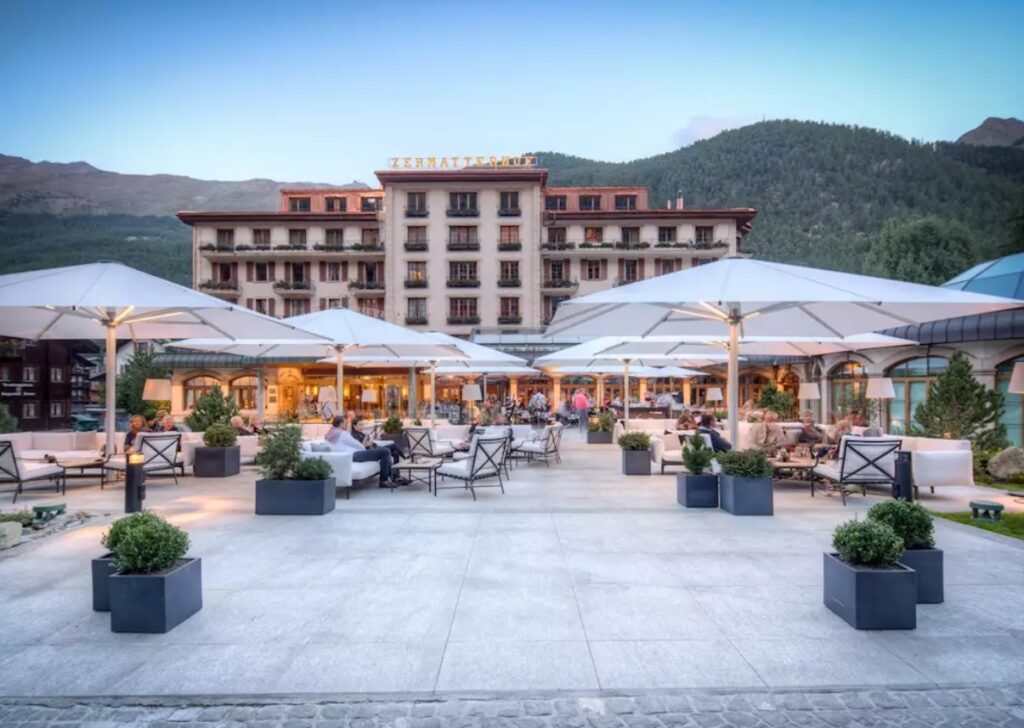
In the heart of the car-free village of Zermatt, the Grand Hotel Zermatterhof represents the pinnacle of Alpine hospitality.
When you book this hotel, you are placing yourself directly in the shadow of the Matterhorn, the most iconic mountain peak in the world.
The Grand Hotel Zermatterhof provides a traditional horse-drawn carriage to whisk guests from the train station, immediately setting a tone of timeless luxury and proximity to the village’s main attractions.
The hotel’s primary value proposition is its view; many suites feature balconies that look directly onto the Matterhorn.
This solves the common traveler’s problem of having to wake up at dawn and hike to a viewpoint just to see the peak’s first light.
At the Zermatterhof, the attraction comes to you. With world-class dining and a sophisticated spa,
it serves as the perfect base for both elite mountaineers and those who simply want to admire the Alps in total comfort.
Hotel Belvedere Grindelwald – Gateway to the Jungfrau Region
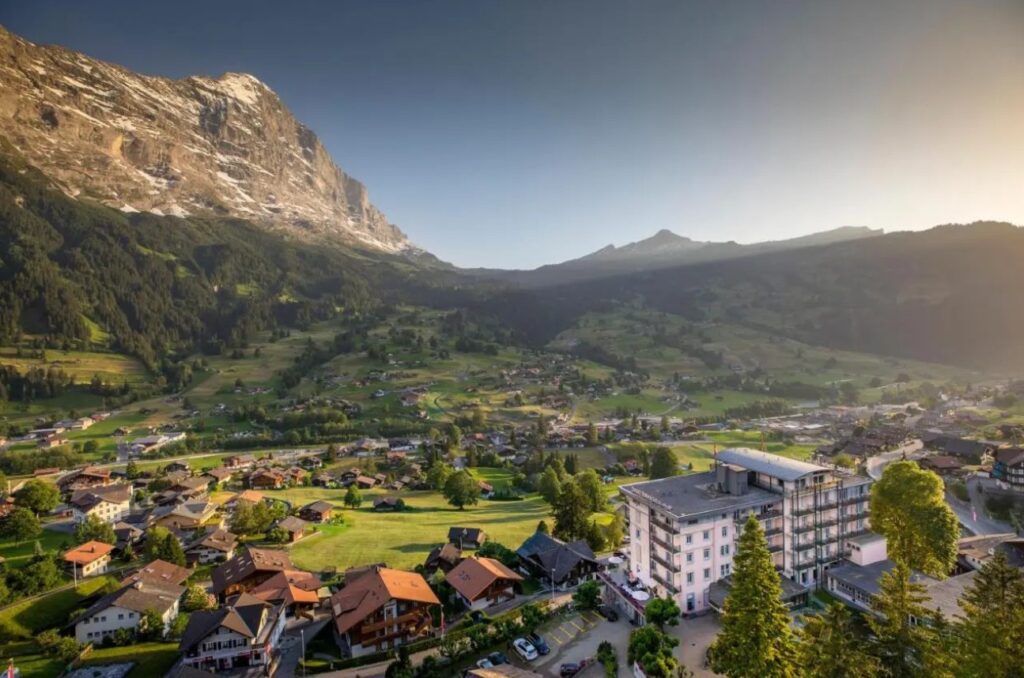
For those focused on the Bernese Oberland, the Hotel Belvedere in Grindelwald offers the most strategic location for exploring the Jungfraujoch – Top of Europe.
The Hotel Belvedere Grindelwald is a family-run gem that has perfected the art of “attraction-adjacent” lodging.
It is located within a 5-minute walk of the Grindelwald train station, the primary gateway for the cogwheel trains heading into the heart of the mountains.
The benefit of staying here is the direct, unobstructed view of the Eiger North Face.
The hotel’s commitment to technology is evident in its modern “Air Cooling” systems—a rarity in traditional Swiss mountain hotels—and its high-speed digital concierge services.
This hotel solves the problem of “tourist transit fatigue” by placing guests at the intersection of luxury and the region’s most famous hiking trails and cable cars.
The Dolder Grand – Overlooking Zurich’s Cultural Sights
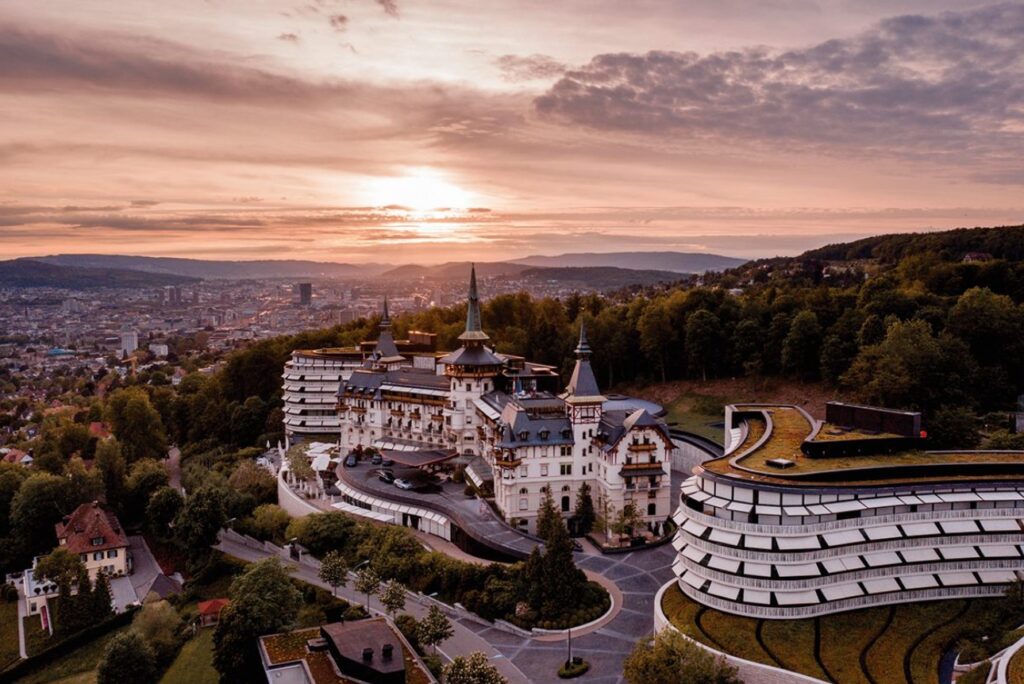
While many think of Swiss attractions only as mountains, the cultural heart of Zurich is an attraction in itself.
The Dolder Grand is a “City Resort” that sits on a hill overlooking the city, the lake, and the distant Alps.
By staying at The Dolder Grand, guests are positioned near the Kunsthaus Zurich (Art Museum) and the historic Old Town, while enjoying a tranquil, forest-surrounded environment.
This hotel uses technology to bridge the gap between its elevated location and the city center via a private funicular and a shuttle service.
It solves the classic city-trip dilemma: the desire to be near the action without the noise and congestion of the urban core.
The Dolder Grand features an extensive private art collection and a world-renowned spa,
making it an attraction in its own right for those who appreciate high-end design and urban proximity.
Vienna House by Wyndham Zur Bleiche – Steps from Rhine Falls
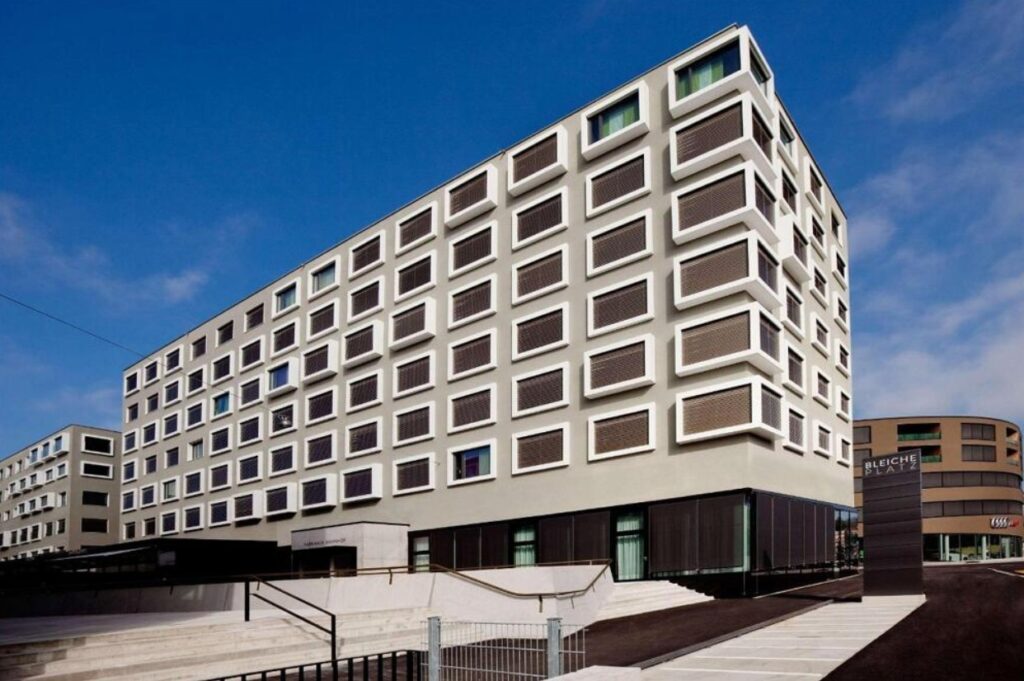
The Rhine Falls is Europe’s largest waterfall and a must-see landmark in Northern Switzerland.
Staying at the Vienna House by Wyndham Zur Bleiche Schaffhausen provides the most convenient access to this natural wonder.
Located in the charming town of Schaffhausen, the hotel is just a short train or bike ride away from the thunderous falls.
The hotel features a sleek, business-casual design that appeals to modern travelers who want efficiency and comfort.
By booking here, you avoid the high prices of Zurich while staying much closer to the falls, allowing for late-evening visits when the waterfall is illuminated.
It solves the problem of “day-trip rushing,” giving you the freedom to explore the medieval architecture of Schaffhausen and the natural power of the Rhine at your own pace.
Comparing Use Cases, Pros, and Cons of Top Swiss Hotels
When deciding where to book hotels near top Switzerland attractions, it is essential to compare how each property serves different travel styles and budgets.
There is no “one-size-fits-all” in Swiss luxury, as each location offers a distinct set of features and challenges.
Bürgenstock Resort vs. Grand Hotel Zermatterhof
- Use Case: Bürgenstock is best for those who want a futuristic, secluded resort experience with lake views. Zermatterhof is ideal for those who love the “Alpine village” feel and want to be in the heart of a world-famous ski and hiking hub.
- Pros: Bürgenstock offers the most modern spa in Europe; Zermatterhof offers a historic, cozy, and highly prestigious village location.
- Cons: Bürgenstock can feel isolated if you want to explore different cities daily; Zermatterhof is in a car-free zone, which requires train-only access.
- Features: Infinity pools vs. horse-drawn carriages and Matterhorn-view balconies.
- Price: Both are in the ultra-luxury tier, often exceeding $800 – $1,200 per night depending on the season.
Hotel Belvedere Grindelwald vs. Vienna House Schaffhausen
- Use Case: Belvedere is for the active mountain explorer. Vienna House is for the cultural traveler or those on a transit-heavy European itinerary.
- Pros: Belvedere has an unbeatable view of the Eiger; Vienna House offers great value for money and proximity to the German border and Rhine Falls.
- Cons: Grindelwald can be extremely touristy in summer; Schaffhausen is a quieter town with fewer high-end dining options than Zurich or Lucerne.
- Features: Eiger-view balconies vs. modern, business-friendly tech and central town access.
- Price: Belvedere is mid-to-high luxury ($400 – $700); Vienna House is more accessible ($200 – $350).
The Dolder Grand as a Unique Hybrid
- Use Case: Best for travelers who want a “best of both worlds” experience—city culture and Alpine serenity.
- Pros: Incredible architecture, massive spa, and Michelin-starred dining.
- Cons: High price point and slightly removed from the immediate “walkable” downtown.
- Features: Private art collection and funicular access.
- Price: High luxury ($600 – $1,000+).
The Benefits of Booking Directly for Targeted Proximity
One of the most significant benefits of using specific hotel products is the “Direct Booking” advantage.
While third-party sites are useful for research, booking directly through a hotel’s portal often unlocks specific room categories that are physically closer to the views or attractions you desire.
Hotels like the Bürgenstock or Zermatterhof prioritize their own booking channels for the most sought-after suites with Matterhorn or Lake views.
Technologically, direct booking portals often integrate better with “Member Only” apps that allow you to use your smartphone as a room key or to book spa treatments and dining reservations before you even arrive.
This level of service technology ensures that your stay is friction-free. By booking directly, you also solve potential communication issues,
as you are dealing with the local staff who know the “secret” viewpoints and the best times to visit local attractions, providing a level of personalized benefit that an automated third-party site cannot match.
See also: Bosnia and Herzegovina Tour Packages
Where and How to Book Your Swiss Stay
Knowing where to buy is just as important as knowing where to stay. The Swiss hotel market is highly regulated, ensuring quality, but prices can fluctuate wildly based on seasonal demand.
Where to Buy:
- Official Hotel Websites: Always the first choice for the “Best Rate Guarantee” and loyalty perks.
- Swiss-Specific Booking Portals: Sites like MySwitzerland.com provide deep insights into local packages.
- Global Platforms: Booking.com and Expedia are excellent for comparing multiple properties in one view.
How Much Does It Cost?
- Ultra-Luxury (Bürgenstock, Zermatterhof, Dolder): Expect to pay between $700 and $1,500 USD per night.
- High-End Boutique (Belvedere): Prices typically range from $350 to $650 USD.
- Accessible Quality (Vienna House): Rates usually fall between $180 and $300 USD.
How to Book:
- Select Your Landmark: Decide if you want a mountain, lake, or city focus.
- Verify Proximity: Use the hotel’s map tool to ensure “walkability” to the attraction.
- Check for Packages: Many hotels offer “Attraction Tickets Included” packages which can save you $50-$100 on local transit or entry fees.
Book Your Stay at Bürgenstock Resort
Book Your Stay at Grand Hotel Zermatterhof
Book Your Stay at Hotel Belvedere Grindelwald
Solving the Swiss Logistics Problem with Strategic Lodging
The primary problem that booking hotels near top Switzerland attractions solves is the “Time-Value Conflict.”
Switzerland is expensive, and every hour spent on a train or bus is an hour not spent enjoying the destination.
By investing in a hotel that is physically near the attraction, you are optimizing your financial investment in the trip.
You eliminate the need for early wake-up calls and late-night returns, which significantly reduces travel stress.
Furthermore, these hotels solve the “Unpredictable Weather” problem. In the Alps, weather can change in minutes.
If you are staying in a hotel near the Eiger or the Matterhorn, you can wait for a clear window in the clouds to take your photos or start your hike.
If you are staying two hours away, you might arrive at the landmark only to find it completely obscured by mist.
Staying near the attraction gives you the tactical flexibility to adapt to the Swiss climate, ensuring you get the views you paid for.
FAQ
1. Is it always more expensive to book a hotel right next to an attraction in Switzerland?
While premium locations generally command higher prices, it is not always the case. By staying in “gateway” towns like Grindelwald instead of on the Jungfraujoch itself, or in Schaffhausen instead of Zurich, you can often find competitive rates that still offer 5-10 minute proximity to the landmark. Additionally, the money saved on long-distance train fares often offsets the slightly higher room rate.
2. Do hotels near attractions offer free transport cards?
Yes, this is one of the best “hidden” benefits of Swiss hotels. Most hotels in Lucerne, Interlaken, Zurich, and Zermatt provide a “Guest Card” upon check-in. This card typically gives you free local bus and train travel within the zone, and often discounts for the major attractions nearby. Always ask at the front desk when you arrive.
3. What is the best month to book hotels to avoid the highest prices?
The “shoulder seasons” of May, June, and September/October offer the best balance. You avoid the extreme prices of the ski season (December–February) and the peak summer crowds (July–August). During these months, you can often find luxury packages near attractions for 20-30% less than peak rates.