
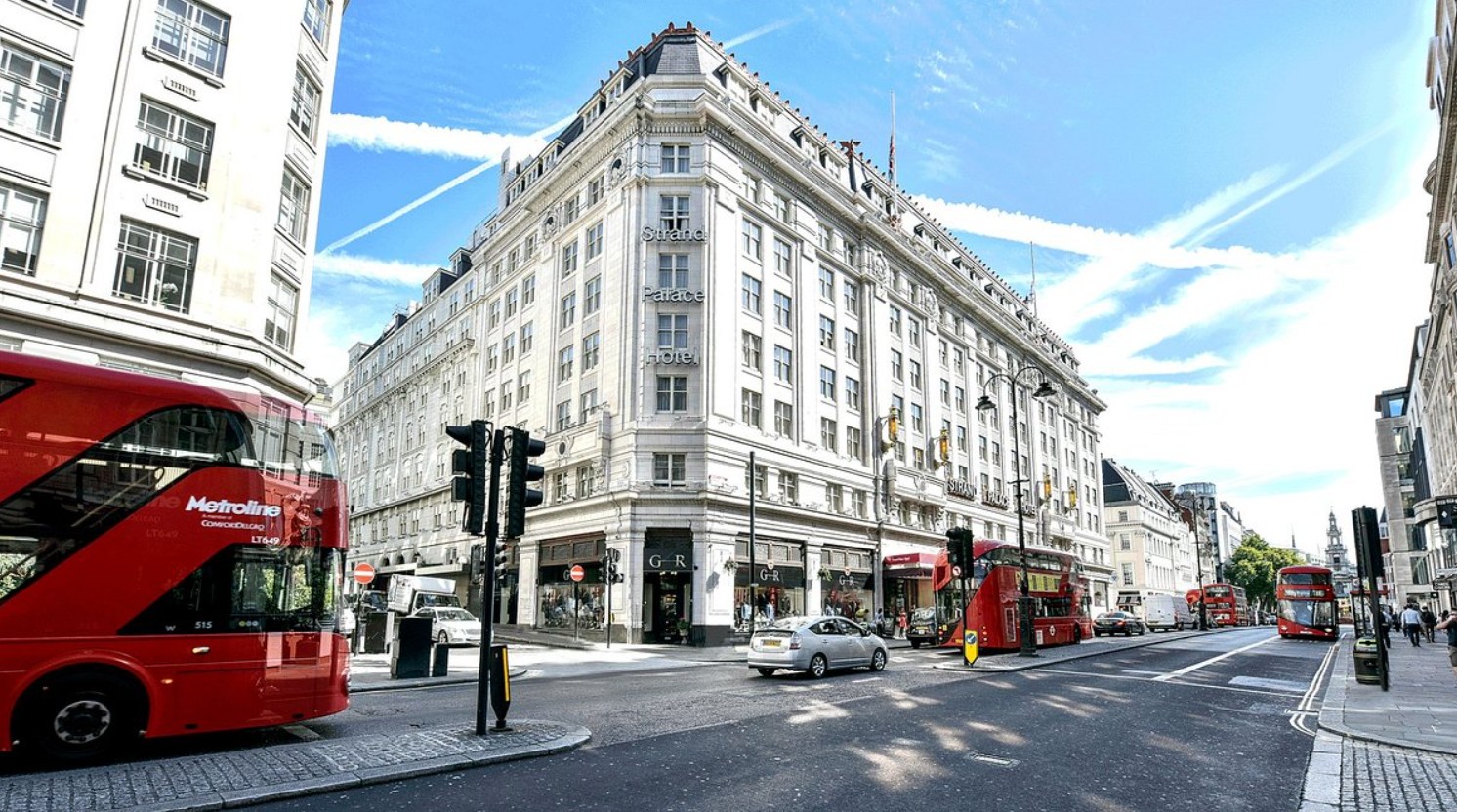
Top Rated Hotels in London-London stands as a global beacon of luxury, historical significance, and architectural marvels.
For the discerning traveller, the city offers an unparalleled array of accommodation options that transcend the standard definition of a hotel.
These establishments are not merely places to sleep; they are cultural landmarks that have hosted royalty, celebrities, and world leaders for centuries.
The demand for top-rated hotels in London is driven by a desire for impeccable service,
strategic locations near iconic landmarks like Buckingham Palace or the Tower of London, and a level of comfort that mirrors the finest residences in the world.
Choosing to book luxury hotels in London involves navigating a rich tapestry of styles, from the classic Edwardian and Victorian opulence of the West End to the sleek, glass-fronted modernity of the City and Southwark.
Each district offers a unique atmosphere, and the hotels within them act as gateways to the local culture.
Whether it is the quiet refinement of Mayfair or the bustling creative energy of Shoreditch, the luxury hotel sector in London ensures that every guest’s preference is met with a high-fidelity experience.
This commitment to excellence is what maintains London’s reputation as one of the most competitive and rewarding luxury hotel markets globally.
Historical Evolution of the Five-Star Standard
The concept of the luxury hotel in London has evolved significantly from the grand “railway hotels” of the 19th century to the tech-integrated sanctuaries of today.
Originally, these establishments were designed to provide the highest level of comfort to travelers arriving by train, featuring innovative amenities of the time like electric lighting and hydraulic lifts.
Over the decades, the standard for a five-star rating has tightened, requiring hotels to provide not just physical luxury but a holistic experience that includes world-class gastronomy, bespoke concierge services, and exclusive wellness facilities.
Today, the historical legacy of these buildings is carefully preserved while being infused with modern necessities.
Many top-rated hotels are housed in Grade II listed buildings, where original cornices and marble floors meet high-speed fiber-optic internet and climate-controlled environments.
This fusion of the old and the new creates a specific “London style” of luxury that is sought after by international travelers.
The continuous reinvestment in these properties ensures they remain at the pinnacle of global hospitality rankings, solving the problem for travelers who refuse to compromise on either heritage or modern convenience.
The Significance of Location and District Branding
When planning to book luxury hotels in London, the specific neighborhood often dictates the nature of the experience.
Mayfair and St. James are synonymous with old-world prestige, housing the city’s most storied properties. These areas offer proximity to high-end shopping on Bond Street and the lush greenery of Hyde Park.
In contrast, the regenerated areas of the Docklands and the South Bank offer a different kind of luxury—one defined by panoramic river views, soaring skyscrapers, and proximity to the city’s financial and artistic hubs.
The choice of location serves as a primary filter for the traveler’s needs. A business executive might prioritize a hotel in the City with advanced meeting facilities and rapid transport links,
while a couple on a romantic getaway might prefer the boutique charm of Kensington or Chelsea.
Understanding the geography of London’s top-rated hotels is essential for maximizing the benefits of the stay.
Each district acts as a brand in itself, promising a specific lifestyle that the hotel then delivers through its curated amenities and local partnerships, ensuring that the “London experience” is as seamless as it is spectacular.
Technological Benefits and Enhanced Guest Experiences
The modern luxury hotel in London utilizes cutting-edge technology to provide a frictionless and highly personalized stay.
This technological integration starts long before the guest arrives, through sophisticated reservation systems that allow for detailed preference mapping.
Guests can specify everything from room temperature and pillow firmness to dietary requirements and airport transfer details through secure, encrypted platforms.
This data-driven approach ensures that the moment a guest walks through the doors, the environment is perfectly tailored to their unique needs, solving the common problem of generic hotel service.
Within the rooms themselves, “Smart Room” technology has become a standard feature in top-rated London establishments.
Integrated systems allow guests to control lighting, entertainment, and climate via centralized tablets or their own mobile devices.
Furthermore, many high-end hotels now offer “invisible service” enabled by technology, where housekeeping or room service can be requested via apps, and digital keys provide secure, contactless entry.
These advancements are not just about novelty; they are about giving the guest absolute control over their environment, reducing wait times, and enhancing the overall sense of privacy and exclusivity.
Advanced Wellness and Biophilic Design Technology
Technology in London’s elite hotels extends deep into the realm of wellness and environmental health.
Many top-rated properties have invested in advanced air filtration systems that ensure hospital-grade air quality, a significant benefit in a bustling metropolis.
Furthermore, the integration of circadian lighting systems helps international travelers adjust to new time zones more quickly by mimicking natural light patterns.
These technological interventions are designed to promote physical well-being, ensuring that guests leave their stay feeling more rejuvenated than when they arrived.
Beyond environmental controls, the fitness facilities in these hotels often feature the latest in bio-metric tracking and virtual training.
From Peloton-integrated gyms to AI-driven personal training sessions, the technology allows guests to maintain their health regimens with precision.
The use of biophilic design—incorporating natural elements and advanced irrigation for indoor greenery—also uses technology to create calming, nature-inspired spaces within the urban core.
This holistic use of technology ensures that the benefits of a luxury stay extend beyond mere comfort into the territory of genuine health and vitality.
Cybersecurity and Data Privacy for High-Net-Worth Guests
For the high-profile individuals who frequent London’s top hotels, cybersecurity is a paramount concern.
Top-rated hotels invest heavily in secure, dedicated Wi-Fi networks and encrypted communication channels to protect the data of their guests.
This is particularly crucial for business travelers who may be handling sensitive corporate information.
The technological infrastructure of a luxury hotel acts as a digital fortress, providing peace of mind in an era where data breaches are a common threat.
Moreover, the use of blockchain and advanced encryption in the booking and payment processes ensures that financial transactions are handled with the highest level of security.
Many luxury establishments also utilize sophisticated CRM (Customer Relationship Management) systems that store guest preferences with high-level encryption,
ensuring that personal data is used only to enhance the guest experience and is never compromised.
This focus on digital safety is a critical, though often unseen, benefit of choosing a top-rated establishment over a standard hotel.
Leading Examples of Top-Rated Hotels in London
The following hotels represent the pinnacle of London hospitality. Each offers a distinct use case, from historical grandeur to modern architectural brilliance.
The Savoy
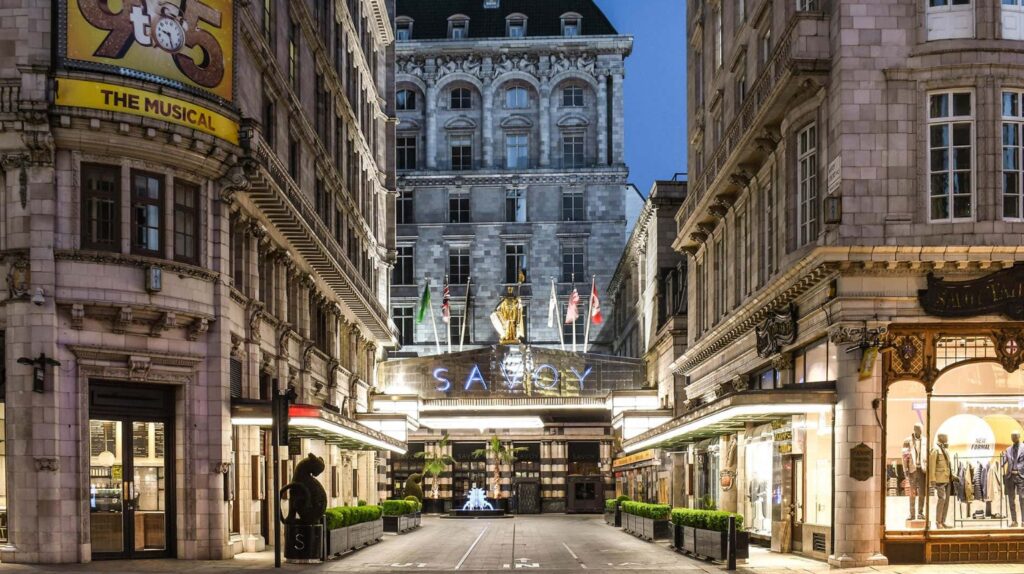
The Savoy is perhaps the most famous hotel in the world, located on the Strand in the heart of the West End.
Since opening in 1889, it has set the standard for luxury, being the first hotel in London to feature electric lights and en-suite bathrooms.
It is the perfect choice for those who want to be at the center of London’s theatre and cultural scene.
Guests choose The Savoy for its impeccable “Savoy Butler” service and its legendary American Bar.
The hotel offers a blend of Edwardian and Art Deco styles, providing an atmosphere of timeless glamour.
Whether you are staying in a room overlooking the River Thames or enjoying afternoon tea in the Thames Foyer, the experience is one of pure British elegance.
Visit The Savoy official website.
The Ritz London
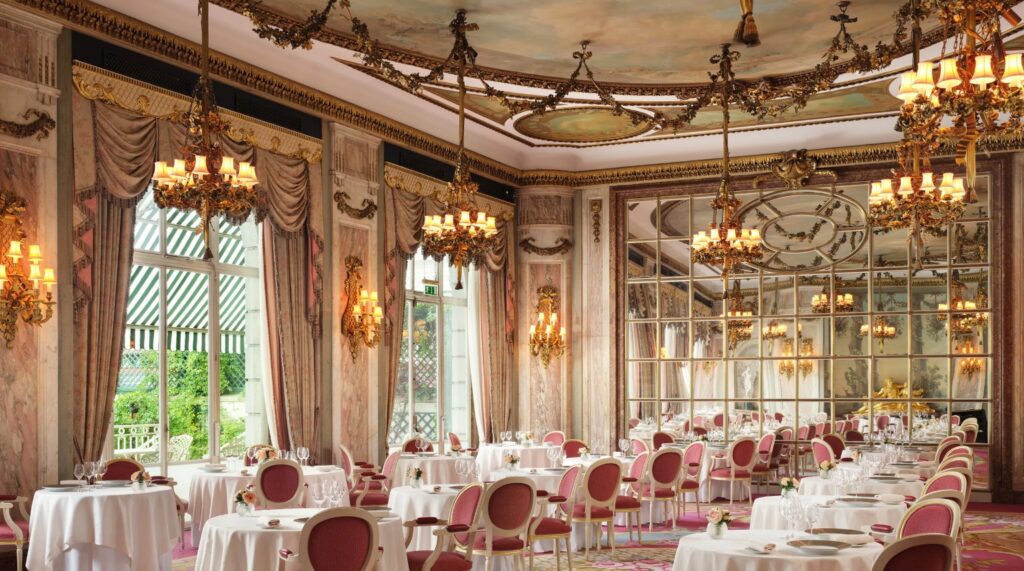
Located in Piccadilly, The Ritz is synonymous with high-society luxury. This Neoclassical landmark is famous for its strict dress code and the world-renowned “Tea at The Ritz.”
It serves as the ultimate destination for travelers who desire a formal, traditional, and incredibly opulent experience that feels like stepping back into the Gilded Age.
The Ritz offers a level of service that is rarely matched, with a high staff-to-guest ratio ensuring every need is anticipated.
Its rooms are decorated in the Louis XVI style, featuring antique furniture and 24-carat gold leaf detailing. For those looking for the quintessential “London Aristocrat” experience, there is no better choice.
Visit The Ritz London now.
Shangri-La The Shard
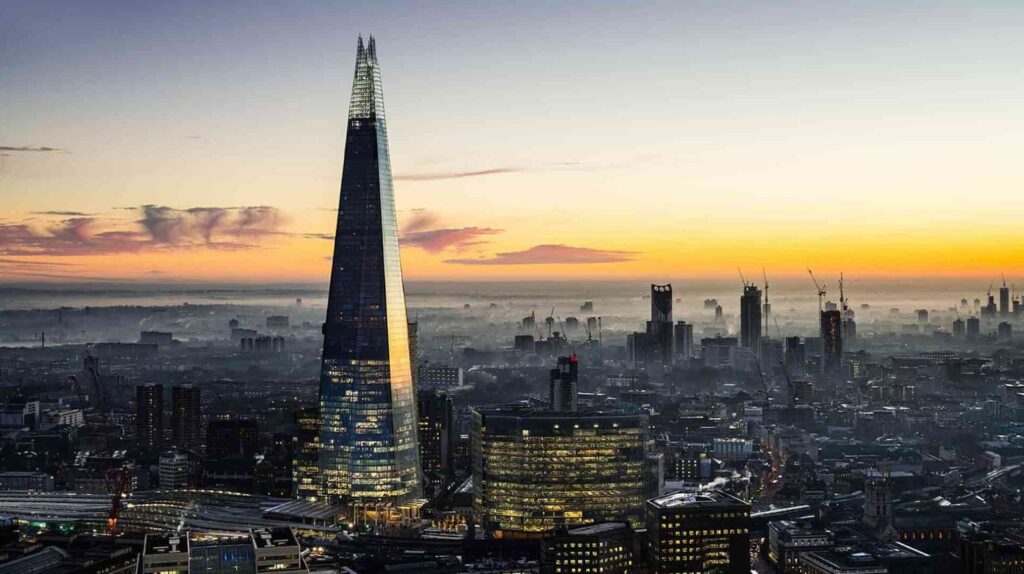
For a completely different perspective, Shangri-La The Shard occupies the 34th to 52nd floors of the UK’s tallest building.
This hotel is the premier choice for modernists and those who want the best views in the city.
Every room features floor-to-ceiling windows, offering a bird’s-eye view of the Tower Bridge, St. Paul’s Cathedral, and the winding Thames.
The hotel features an infinity sky pool and a high-altitude bar, Gong, which is the highest in London. The aesthetic is sleek and Asian-inspired, focusing on tranquility and light.
It solves the problem of feeling cramped in a busy city by lifting guests high above the noise and providing a sense of immense space and serenity.
Visit Shangri-La The Shard now.
Claridge’s
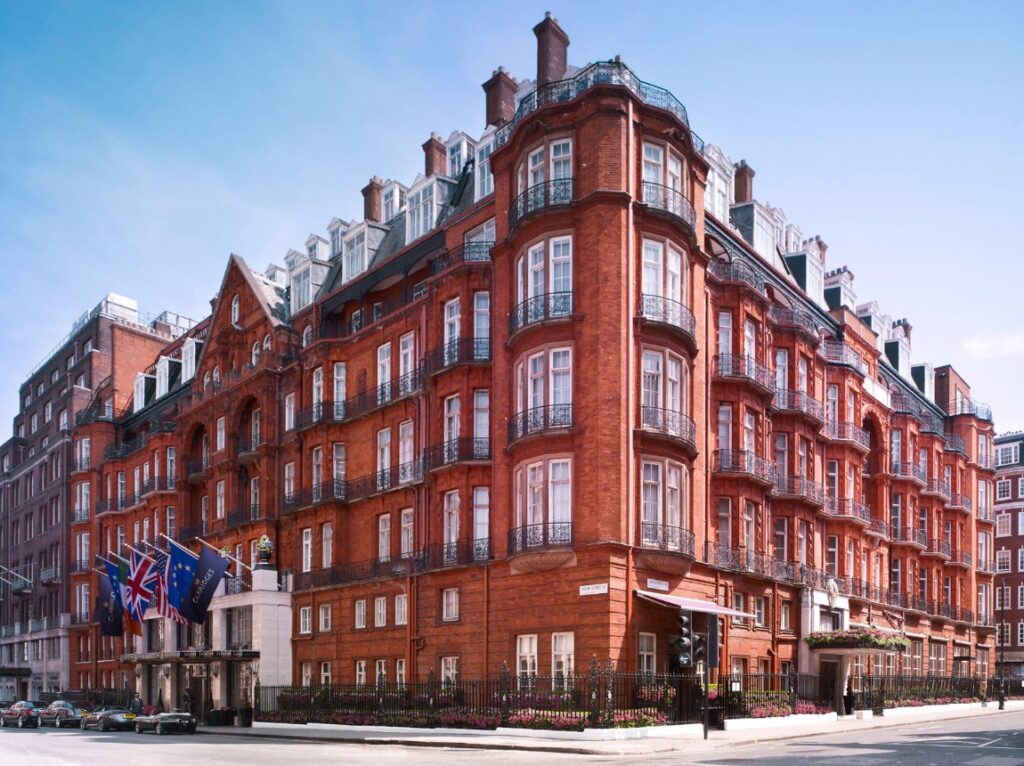
Located in Mayfair, Claridge’s is often referred to as the “annexe to Buckingham Palace” due to its long-standing relationship with royalty.
It is a masterpiece of Art Deco design and serves as a hub for the fashion and art elite. Claridge’s is the ideal use case for travelers who want a “home away from home” that is both incredibly stylish and discreet.
The hotel is famous for its large suites and its commitment to bespoke service. From the hand-painted de Gournay wallpaper to the iconic black-and-white marbled lobby,
every inch of the hotel exudes sophisticated taste. It is a favorite for those who value privacy and a refined social atmosphere.
Visit Claridge’s now.
The Ned
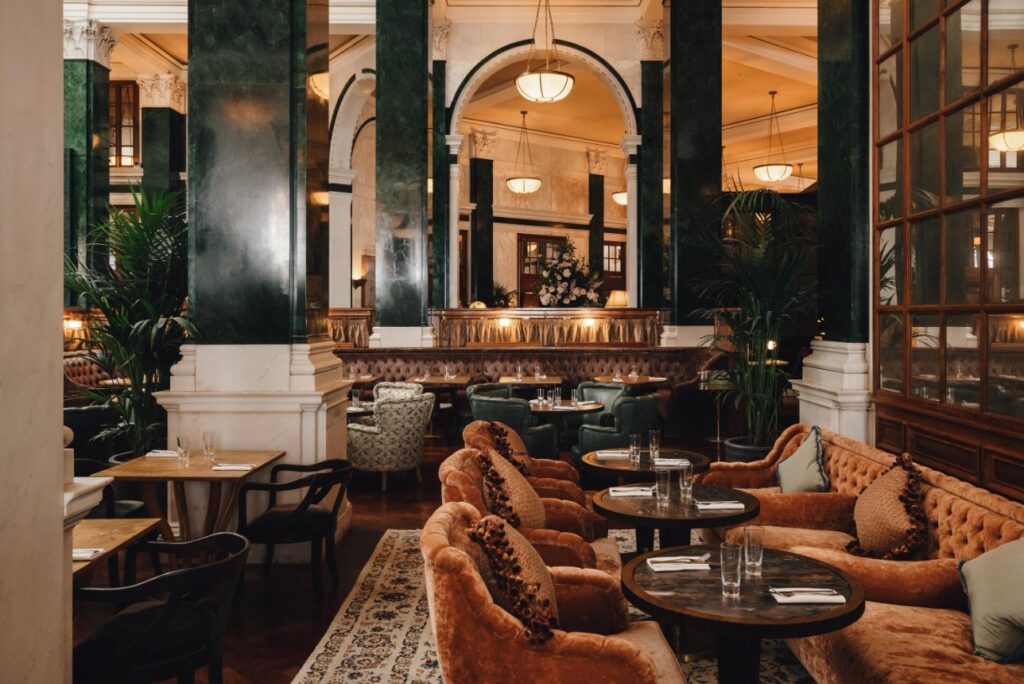
The Ned, located in the City of London, is housed in the former Midland Bank headquarters.
It is a massive, multi-use space that includes a hotel, a members’ club, and ten restaurants within a grand 1920s banking hall.
It is the perfect hotel for socialites, business professionals, and those who enjoy a vibrant, high-energy environment.
What sets The Ned apart is its extensive facilities, including a rooftop pool overlooking St. Paul’s and a spa located in the original bank vault.
The rooms are styled with “Roaring Twenties” flair, featuring vintage-style hardware and rich fabrics.
It solves the problem of having to leave the hotel for entertainment, as everything from live music to world-class dining is available on-site.
Visit The Ned now.
Comprehensive Product Comparison and Use Case Analysis
When deciding which of these top-rated hotels to book, it is essential to compare them based on their specific strengths and price points.
Each caters to a different demographic and solves a different travel problem.
The Savoy vs. The Ritz (Traditional Luxury)
- Use Case: Choose The Savoy for theatre proximity and a mix of Art Deco/Edwardian style. Choose The Ritz for the most formal, traditional British experience possible.
- Pros: The Savoy has better river views; The Ritz has a more prestigious “Piccadilly” address.
- Cons: The Savoy can feel very busy due to its location; The Ritz has a strict dress code that may feel restrictive to some.
- Price: Both range from £700 to £2,000+ per night depending on the suite.
- Features: Savoy: Butler service, American Bar. Ritz: Palm Court Afternoon Tea, Michelin-starred dining.
Shangri-La The Shard vs. The Ned (Modern vs. Social)
- Use Case: Choose Shangri-La for romantic views and modern serenity. Choose The Ned for a “see-and-be-seen” social atmosphere and vast dining options.
- Pros: Shangri-La has the best views in London; The Ned has an incredible rooftop and vault spa.
- Cons: Shangri-La is south of the river (away from the West End); The Ned can be very loud and crowded in the evenings.
- Price: Shangri-La is generally more expensive, starting around £800. The Ned starts around £400-£500.
- Features: Shangri-La: Infinity Sky Pool. The Ned: 10 restaurants, members’ club access.
Claridge’s (The Independent Choice)
- Use Case: Best for long-term stays or those who want the ultimate Mayfair lifestyle.
- Pros: Incredible service, very discreet, iconic design.
- Cons: Extremely high demand makes booking specific suites difficult.
- Price: One of the most expensive in London, often starting above £900.
- Features: Massive suites, legendary bar, fashion-forward atmosphere.
Why People Need to Book Luxury Hotels in London
The primary problem these products solve is the need for a “frictionless” travel experience.
In a city as large and fast-paced as London, logistical issues like traffic, noise, and complex navigation can drain the joy from a trip. A top-rated hotel acts as a sanctuary.
By providing centralized locations, private transport arrangements, and 24/7 concierge service, these hotels eliminate the stress of travel.
People need these hotels because they offer a guaranteed standard of quality that protects their most valuable asset: their time.
Furthermore, these hotels provide an environment that supports both productivity and rest.
For the business traveler, the “problem” is the need for a professional yet comfortable space to work and entertain.
A luxury hotel provides high-speed infrastructure and impressive meeting rooms. For the leisure traveler, the “problem” is the desire for a memorable, once-in-a-lifetime experience.
These hotels solve this by offering access to exclusive events, world-class dining, and a level of pampering that standard accommodations simply cannot match.
See also: Hotels Near Attractions in Spain
How and Where to Book
To secure the best rates and ensure your specific preferences are met, it is highly recommended to book directly through the hotel’s official website or through a luxury-specialized travel advisor.
Direct booking often provides benefits like late check-out, complimentary breakfast, or room upgrades that are not available through third-party discount sites.
Where to Buy:
- Official Websites: The most secure way to book, often featuring exclusive “Member Rates.”
- Preferred Partner Programs: If you use a Virtuoso or AMEX Fine Hotels & Resorts advisor, you can often get $100 credits and guaranteed upgrades.
How Much to Pay:
- Standard Luxury Rooms: Expect to pay between £500 and £900 per night.
- Signature Suites: These range from £1,500 to over £15,000 per night for the most exclusive penthouses.
Booking Process:
- Navigate to the hotel’s official booking engine.
- Select your dates and “Luxury Package” options.
- Enter your loyalty program details (if applicable).
- Use the “Special Requests” box to detail any technological or dietary needs.
FAQ
What is the best area to stay in London for first-time luxury travelers?
For first-time visitors, Mayfair or the West End (near The Savoy or Claridge’s) is ideal. These areas are within walking distance of major landmarks, world-class shopping, and the finest restaurants, making navigation easy and the experience highly concentrated.
Do London luxury hotels have a strict dress code?
It varies. The Ritz maintains a famous formal dress code (jackets for men in certain areas). Most other hotels like The Savoy or The Ned operate on a “smart-casual” basis. It is always best to check the specific restaurant or bar requirements within the hotel before your visit.
Is it better to book luxury hotels in London in advance or last minute?
For top-rated hotels, booking 3–6 months in advance is highly recommended. London is a year-round destination with high occupancy rates. Booking early ensures you get your preferred room type and can often secure “Advance Purchase” discounts of 10-20%.